Many overseas buyers encounter mold, damp deformation and fabric mildew problems after receiving furniture shipped by sea. Especially for export orders to tropical and subtropical humid markets such as Southeast Asia, Middle East coastal cities and South America, container high humidity and temperature difference are the main causes of furniture damage.
Sofas, upholstered beds, wooden leisure chairs and other furniture contain wood and sponge fabrics, which are very easy to absorb moisture during long-distance transportation. Once the moisture cannot be discharged in time, it will lead to wood mold, fabric mildew, odor and even structural deformation, bringing serious after-sales losses to buyers.
Factory raw material moisture control is the first line of defense. All solid wood and multi-layer board raw materials used in export furniture will be professionally dried to control the moisture content within the international standard range, fundamentally reducing the mold risk of wooden structures. Sponge and fabric materials are also stored in constant temperature and humidity warehouses to avoid dampness before production.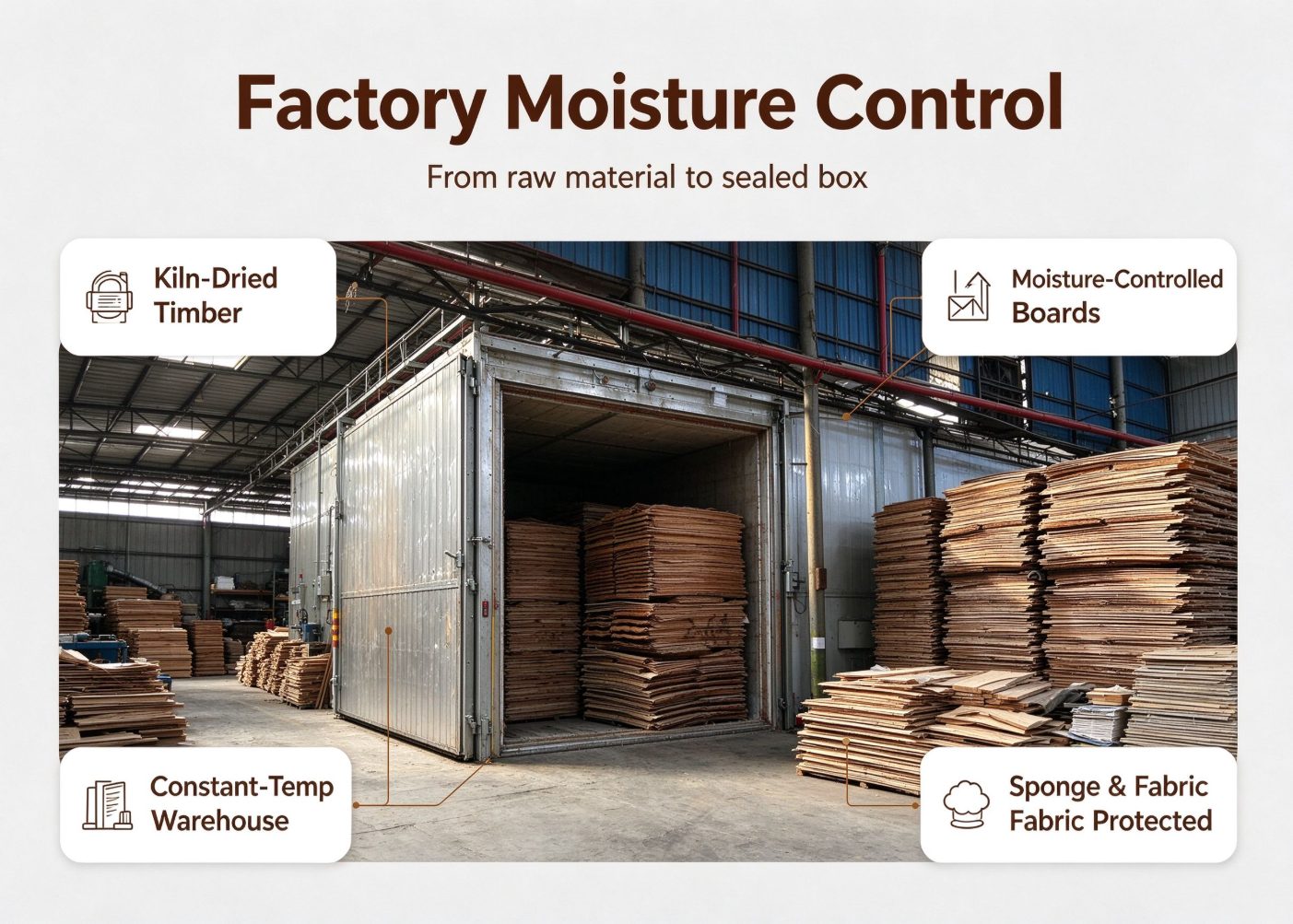
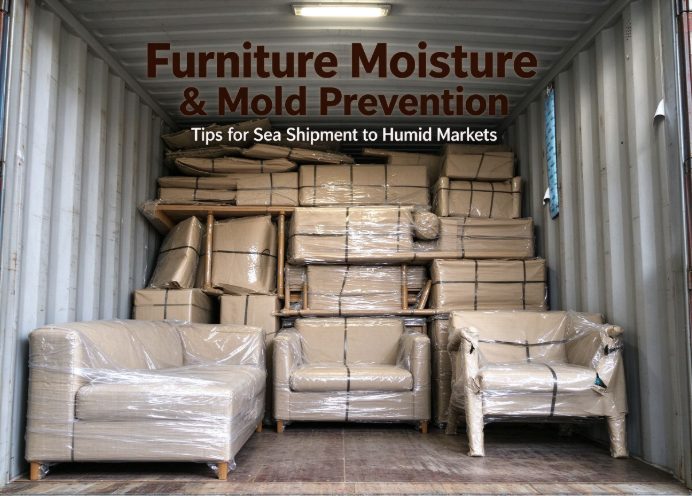
Targeted anti-mold packaging is the core guarantee for humid market orders. Our factory uses thickened moisture-proof fully wrapped films, high-efficiency desiccants and anti-mold tablets for all furniture exported to humid areas. The packaging is fully sealed to isolate external moisture, and reserved with breathable holes to avoid water vapor accumulation inside the package.
Container loading specifications also affect the moisture-proof effect. We strictly avoid placing furniture close to the container wall where condensation is easy to form, and reserve uniform gaps for air circulation inside the container. For super-long ocean transportation orders, we will add extra anti-mold protection measures.
Professional moisture-proof and anti-mold technology can effectively reduce the export furniture damage rate. Our Foshan factory has mature packaging solutions for humid market shipments, helping global buyers eliminate transportation quality risks.