1. Frame and joinery
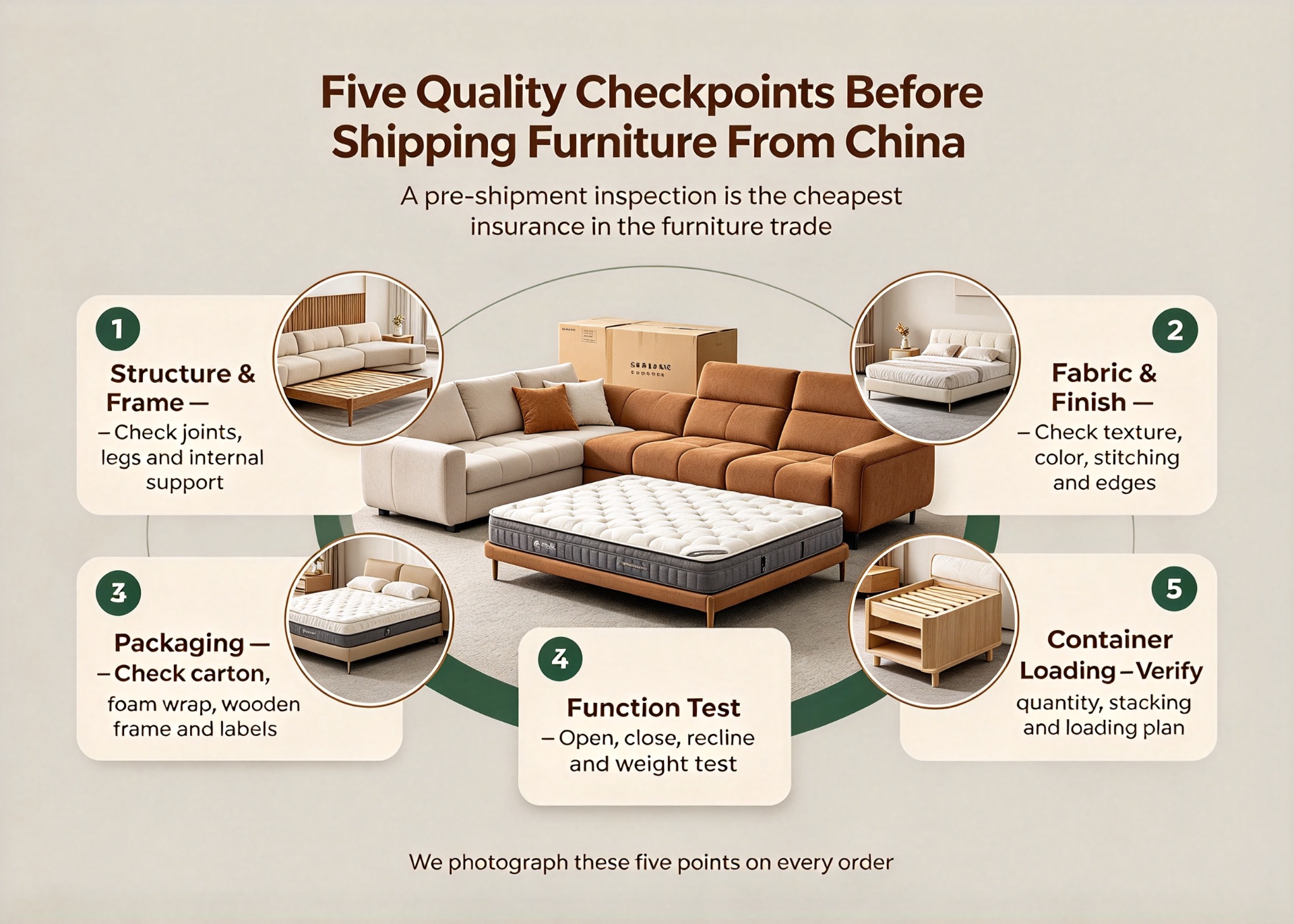
Check corner blocks, glue lines and staple placement. A frame that creaks when lifted will creak louder in a customer's living room. Ask for a photo of the frame before the foam goes on.
2. Foam density and recovery
Sit on the same seat for 60 seconds, then photograph it immediately. A slow recovery means low-density foam and a sagging complaint within a year. Standard residential seating should be 28 to 32 kg per cubic metre.
3. Fabric alignment and stitching
Pattern matching across seams and arm panels is where low-cost production shows. Look for puckering and for stitch density below eight stitches per inch.
4. Measurements against the signed drawing
Measure three units from the same batch, not one. Dimensional drift inside a batch is a sign the factory is out of tolerance, and it breaks your retail planogram.
5. Packaging and moisture protection
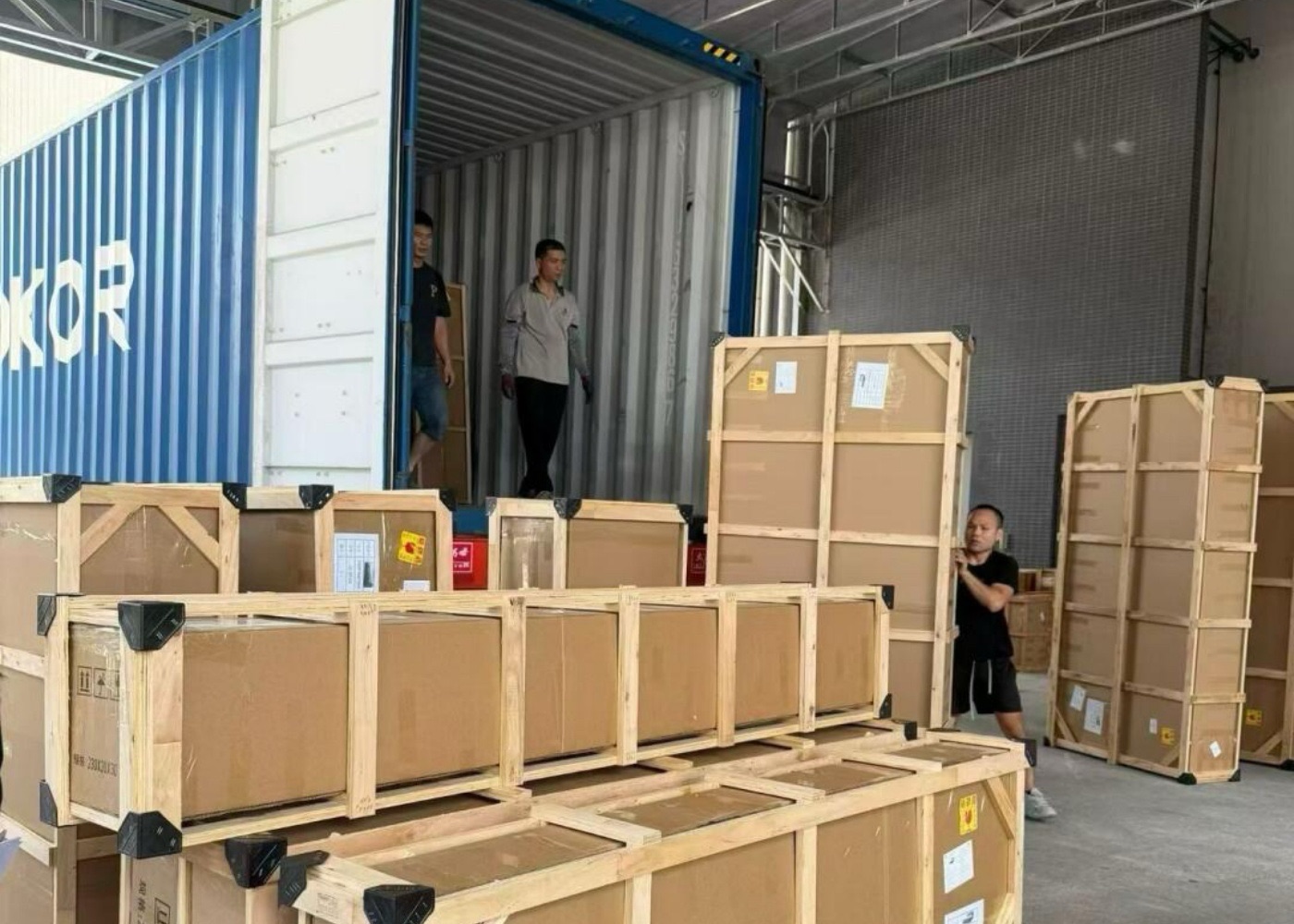
Confirm corner protectors, a moisture barrier and the carton drop marking. Then ask the factory to load the container while photographing the fill, so you can see whether the loading plan was followed.